EUDR · Regulation (EU) 2023/1115 · applies 30 December 2026
The evidence record behind your EUDR due diligence.
From 30 December 2026, importers of cocoa, coffee, palm oil, rubber, soy, cattle and wood must hold the geolocation of every plot behind a shipment, and show the ground was not forest cleared after 31 December 2020. Penalties reach 4% of EU-wide turnover.
Article 38(2)–(3) · Article 9(1)(d) · Article 2(13) · Article 25(2)(a)
Vidimus reads the public satellite archives over your plots and keeps what it finds: a before and after pinned to the cut-off date, loss counted per pixel against the EU's own forest baseline, an explicit record of the days nothing could be seen, and every figure re-derivable years later, when an auditor asks how you knew.
Over a thousand real plots · 26 countries · all 7 regulated commodities · open source · reading needs no account
Your coffee started on a piece of ground.
So did the chocolate, the palm oil in almost everything, and the rubber on your car. This is one of those plots, a rubber concession in Cambodia, on both sides of the cut-off date. Drag the line.

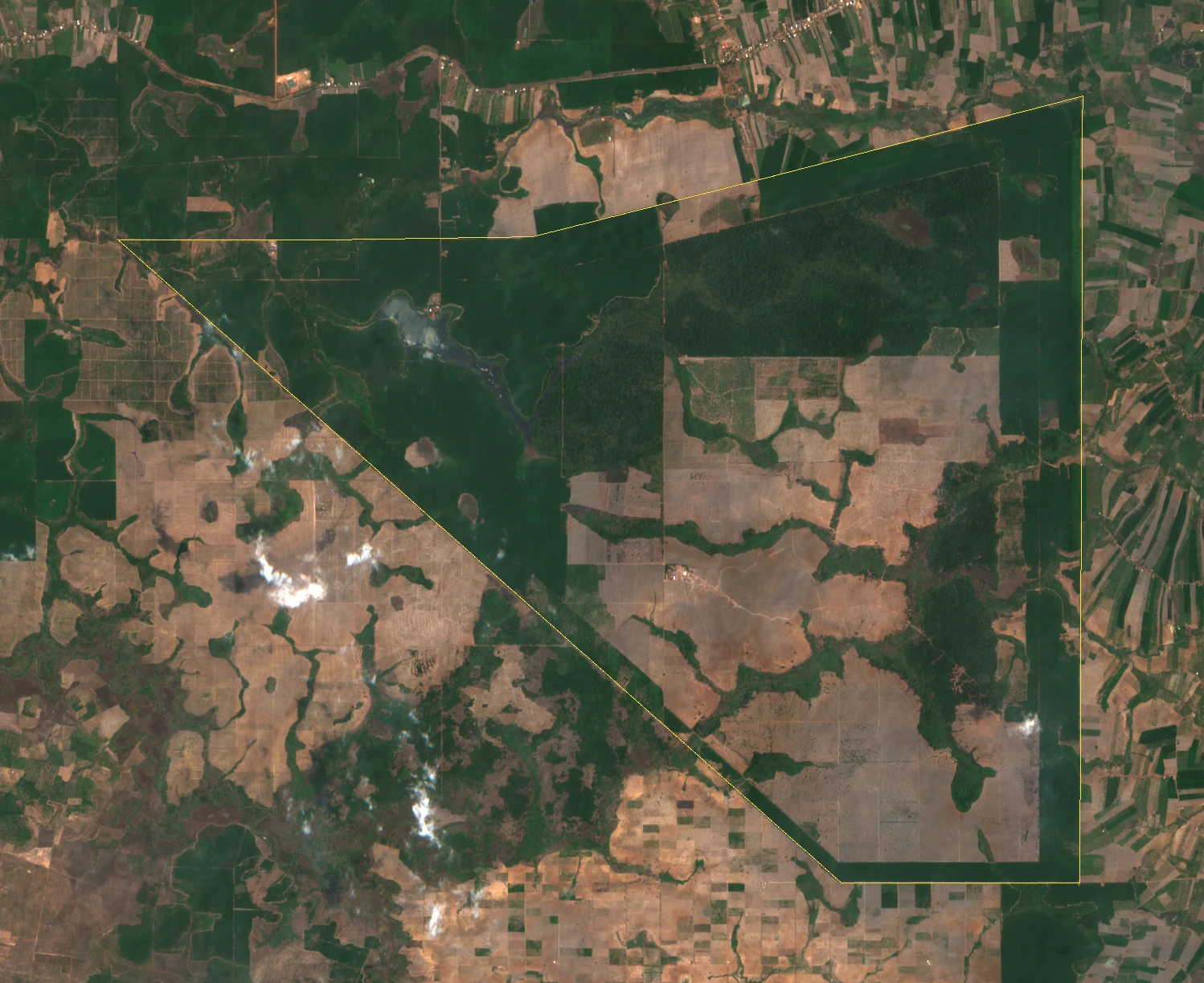

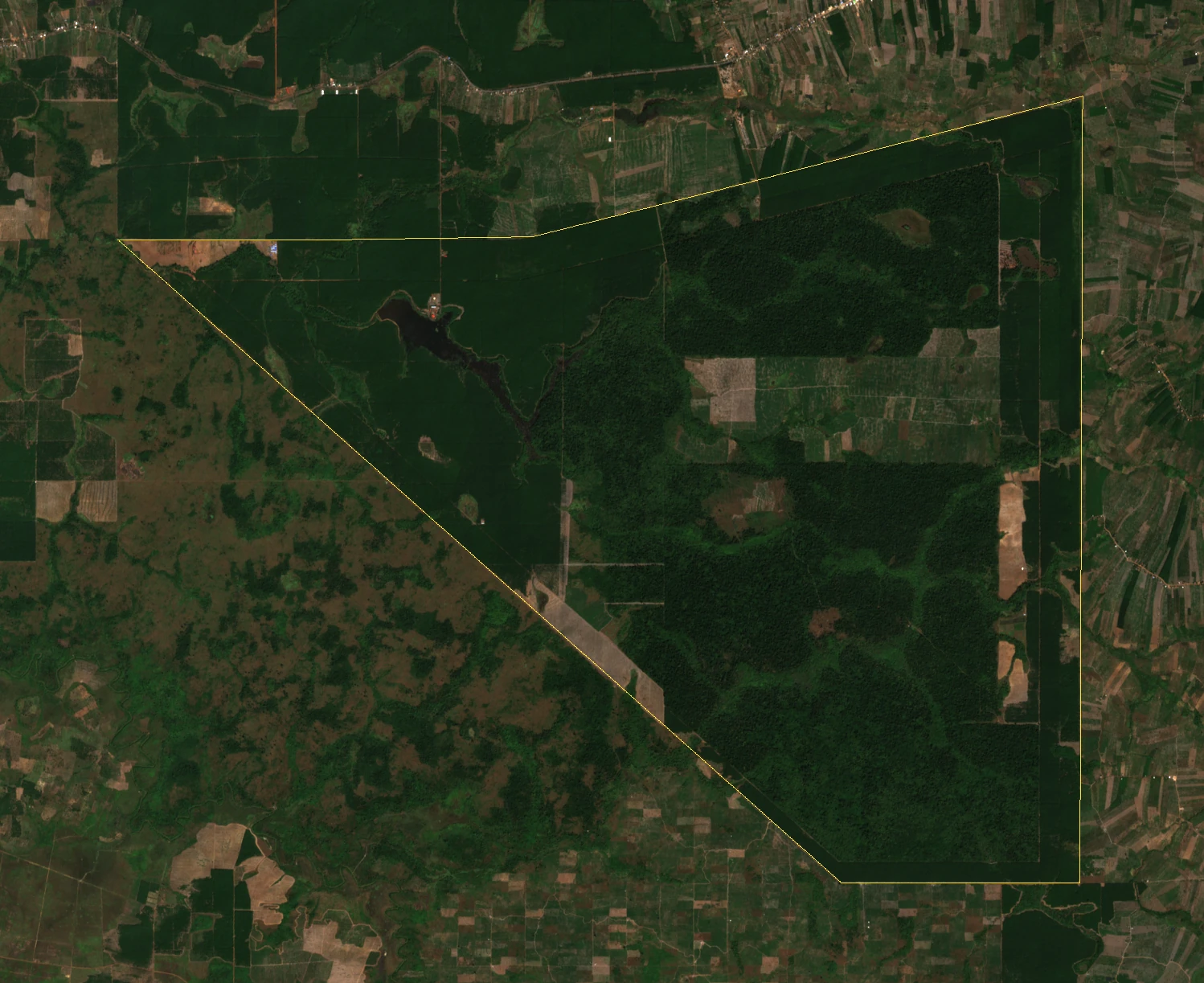
Plot KHM-ELC-193. Sentinel-2 L2A, Copernicus, rendered at the same window on both dates so they register. Hectares are measured per pixel against the JRC Global Forest Cover 2020 baseline: the loss is counted only where that map says forest stood on 31 December 2020.
The satellite is the easy part.
Plenty of tools will draw a red polygon over a clearing. The hard question arrives afterwards, in a room with an auditor: how do you know. Which map said so, at which version, downloaded on which day, and how often is that map wrong?
Under Article 31 a competitor can oblige an authority to investigate you. Penalties reach 4% of EU turnover. A finding you cannot re-derive in five years is not evidence. It is a screenshot.
Per pixel, not per plot
Loss after the cut-off is intersected with the forest baseline pixel by pixel. A clearing on ground that was already plantation in 2020 is not deforestation, and counting it as such would flag suppliers who did nothing wrong.
It tells you when it could not see
Cloud, no imagery before the cut-off, a plot straddling two satellite tiles. Each is recorded as its own state. We could not observe this never renders as we observed nothing. That distinction is the whole product.
Re-derivable in 2031
Every number carries the layer, its version, the day it was retrieved and the commit that computed it. Geometry is immutable once recorded. Nothing is repaired quietly.
What the law actually says.
Every article below links to the text. The regulation has been amended twice and the article numbers move, so these were checked against the consolidated version rather than quoted from memory.
Commodities count as deforestation-free only if produced on land not subject to deforestation after 31 December 2020, and wood only if harvested without inducing forest degradation after that date.
The operator must collect the geolocation of all plots of land where the commodities were produced, together with the date or time range of production.
Land spanning more than 0.5 hectares with trees higher than 5 metres and a canopy cover of more than 10%, or trees able to reach those thresholds in situ.
Relevant commodities and products may not be placed on the market, made available, or exported unless they are deforestation-free, produced lawfully, and covered by a due diligence statement.
Due diligence means collecting the information in Article 9, assessing risk under Article 10, and mitigating it under Article 11.
Operators must verify and analyse the information collected and determine whether there is a risk that the products are non-compliant.
Fines proportionate to the environmental damage and the value of the commodities, with a maximum of at least 4% of total annual Union-wide turnover in the preceding financial year.
Any natural or legal person may submit a substantiated concern to a competent authority, which must assess it and inform the submitter of its decision.
A three-tier classification of countries as low, standard or high risk, which determines how much checking a consignment attracts.
Applies from 30 December 2026 for large and medium operators, and from 30 June 2027 for natural persons and micro or small undertakings established as such by 31 December 2024.
And what has changed since
- Regulation (EU) 2025/2650
Of 19 December 2025. Moved application to 30 December 2026, rewrote Articles 3, 4, 8, 31 and 37, and inserted Article 4a — a simplified regime under which micro and small primary operators may give a postal address instead of geolocation.
- Regulation (EU) 2024/3234
Of 19 December 2024. The first one-year delay.
- Implementing Regulation (EU) 2025/1093
Of 22 May 2025. Sets the country risk classification under Article 29. The European Parliament objected to the methodology in July 2025 — the objection has no suspensive effect, but the Commission announced a review, so treat the tier list as a versioned input.
Full consolidated text: Regulation (EU) 2023/1115 as amended. None of this is legal advice.
It will not tell you a plot is clean.
No satellite can certify compliance, and the words certified, guaranteed compliant and deforestation-free are forbidden from appearing in anything this system outputs. What it produces is a vidimus, the old chancery clause meaning we have seen: an attestation that this ground was examined, on these dates, against these sources, by a method you can repeat. What the evidence means is a judgement, and a judgement belongs to a person who signs it.
Every plot, source and figure is open to read. No account, no tracking.